Nicholas Rahn’s treatment in the video for Grocer’s song “Calling Out” presents the appropriately surrealistic mood of the song. People dressed in animal suits as a pig, a bird, a horse and perhaps a caterpillar work regular jobs as part of the usual rat race and in desperate need of some time out of that maddening and mind-dullening world as exemplified by the discordantly playful, herky jerky dynamic of the song with guitar both in staccato melody and in frantic pace with the rhythm. The vocals sound like inner dialogue diary entries sketching out the unspoken thoughts and all but shouting them like a triumph over the overwhelming mundanity of too much of everyday existence. The video ends with the members of the band sitting at a diner table being served by the caterpillar in one of the more meta music video moments in recent times and ending like we’ve just seen an outtake of an episode from Kids in the Hall, Mr. Show or Wonder Showzen with a different cast. Fans of Dehd and Lithics will probably find something endearing about the song and what Grocer is doing in general. Watch the video for “Calling Out” on YouTube, follow Grocer at the links provided and check out the rest of the group’s new album Numbers Game which released on May 6.
Magali, A Cult pushes us into an alternate dimension in the future in the song “Auntie Christ.” The frenetic beats and dynamics is like a breakcore mashup of Laurie Anderson, the Butthole Surfers and Atari Teenage Riot. The narrative is from the perspective of a woman who goes on an odd trip with a friend to a place she doesn’t know but where the friend has family memories of traveling to that place. But they meet a man who doesn’t seem to know what’s going on. All of this is told in a nearly deadpan voice with a twinge of the whimsical not unlike the aforementioned Anderson in her United States Live performance recordings while a propulsive and fragmented beat carries on at a frenzied yet precise clip of tones and percussive sounds. When the voice of the friend enters the song it’s a cartoonishly robotic tenor and barely decipherable except you can sometimes hear the wonderful play on words that is the title of the song “Auntie Christ.” It makes one wonder if the friend is actually an android or if the narrator might be? Does it all take place in a strange simulation? Whatever the actual intention the imagery created in the narrative is strangely vivid and dreamlike and now brings to mind the title of that Philip K. Dick novel about androids dreaming of electric sheep except do androids dream of past family associations and go on a pilgrimage to reconnect with those memories the way K did in Blade Runner: 2049 except in this somewhat less bleak fashion? The song offers no pat answers but does provide a wonderfully strange story that has the haunted and otherworldly quality one finds in the more unusual works of Shirley Jackson. Listen to “Auntie Christ” on Spotify and follow Magali, A Cult at the links below.
You can always depend on rapper/producer Dax for a compelling video for his songs and an interesting take on the subject even when the main character is his version of the Grinch. But “Dear Alcohol” tackles a subject much more serious in a direct way. The video embodies how addiction can keep you trapped in a self-reinforcing cycle of ritualistic behavior that at one time seemed like something fun or at least which put a salve on other psychological issues borne out of challenging times in life that too often last longer than we want to admit or which aren’t going away any time soon even if our coping mechanism of choice is self-destructive habits. But Dax’s approach to the issue is one of compassion and empathy from the perspective of someone who has been there. The chorus of “I got wasted because I didn’t want to deal with myself tonight, my thoughts get drowned until I feel alright, I keep drinking until I’m someone I don’t recognize, I got wasted.” The video shows what it’s like to be trapped there in vivid detail and what it must be like for the people who love us to be looking in and not always able to help us when we’re not able or willing to help ourselves and the frustration and seeming impossibility of exiting that cycle until something breaks through that bubble from within or without that makes moving beyond that cycle possible. The strings and introspective tones give the song the level of vulnerability and openness that are probably required to be able to overcome addiction to something like alcohol so ingrained in our culture and socialized in so many social situations that in some measure can be essentially harmless. But when you live in a society that encourages and celebrates overindulging while putting a lot of pressure on everyone to work hard all the time while grinding you down if you’re not always “winning” it can be one of the one of the toughest things to give up using to excess because it can impose oblivion on you with little effort. Watch the video for “Dear Alcohol” on YouTube and follow Dax at the links below.
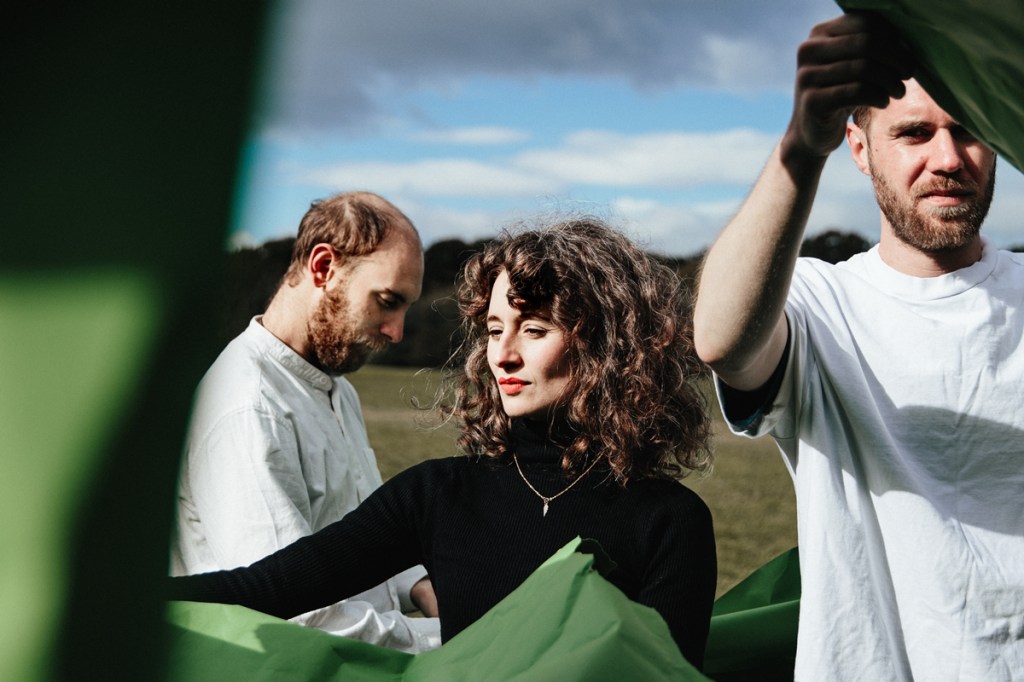
Elder Island is a trip-hop influenced trio from the home of that downtempo electronic music that emerged in the 90s in Bristol, UK where Katy Sargent, Luke Thornton and David Havard met at university. Starting life in the early 2010s as an experimental folk act its members had access to seeing the great electronic artists of their early days and inspired by the power of that music and its ability to stir emotions in ways different from the types of instruments you’d use to make even more avant-garde folk. But fusing the styles completely and arranging the music almost like a trip hop jazz lounge group, Elder Island’s debut album The Omnitone Collection was a set of lush, soulful, deeply atmospheric pop with surprisingly spare arrangements that left a great deal of room for experimenting with dynamics that invited the listener to project their imagination on to the open spaces of the music. At that point in the band’s history its three members were multi-instrumentalists who had learned to integrate its broad sonic palette with imaginative arrangements and creative production. The 2021 album Swimming Static was completed on either end of the 2020 (and ongoing) pandemic with work done in between since Elder Island all lived together or nearby. The record reflected the band’s expanding access to analog synthesizers and the ability to freely incorporate those elements into the songwriting resulting in pop songs that have resonance with early analog synth artists like Kraftwerk, Giorgio Moroder and OMD as well as synth pop groups of the 80s and modern practitioners of the art of dramatic tonal and dynamic arrangements like Nation of Language and Perfume Genius.
Empty Cans In Outer Space’s video for “Zabble Dub” is paired well with the cosmic, IDM dub of the song in its depiction in black and white what looks like training for a space program. The steady electronic percussion makes the brighter tones seem to shine brighter and the warping drones and near white noise shimmering sound drift by and flow freely with a hint of the melancholic and mysterious. When the rocket ship takes off from the launchpad the sounds go more direct. The moment where we watch someone watching the rocket launch is wonderfully meta and not long after we see the first hint of color outside the black and white with the images going red and then the images of astronauts dead with only their skulls visible through the helmets as they sit like Major Tom but in geosynchronous orbit beyond the practical effort to recover, casualties of humankind’s tentative forays beyond the earth, victims of unfortunate circumstances. There was a hint of a tragic and mournful undertone to the song and by the end of the video we find out one possible explanation and yet there is a stark yet richly realized beauty to every aspect of the video and of the music itself. Watch the video for yourself on YouTube and follow Empty Cans In Outer Space on Spotify.
Dehd at Bluebird Theater 5/2/22, photo by Tom Murphy
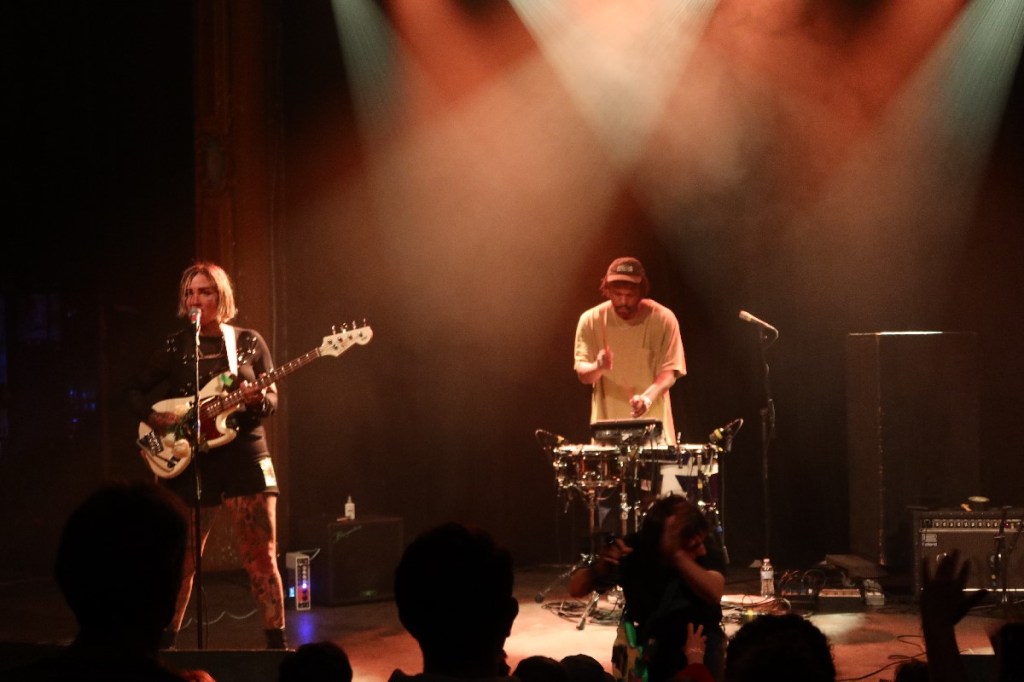
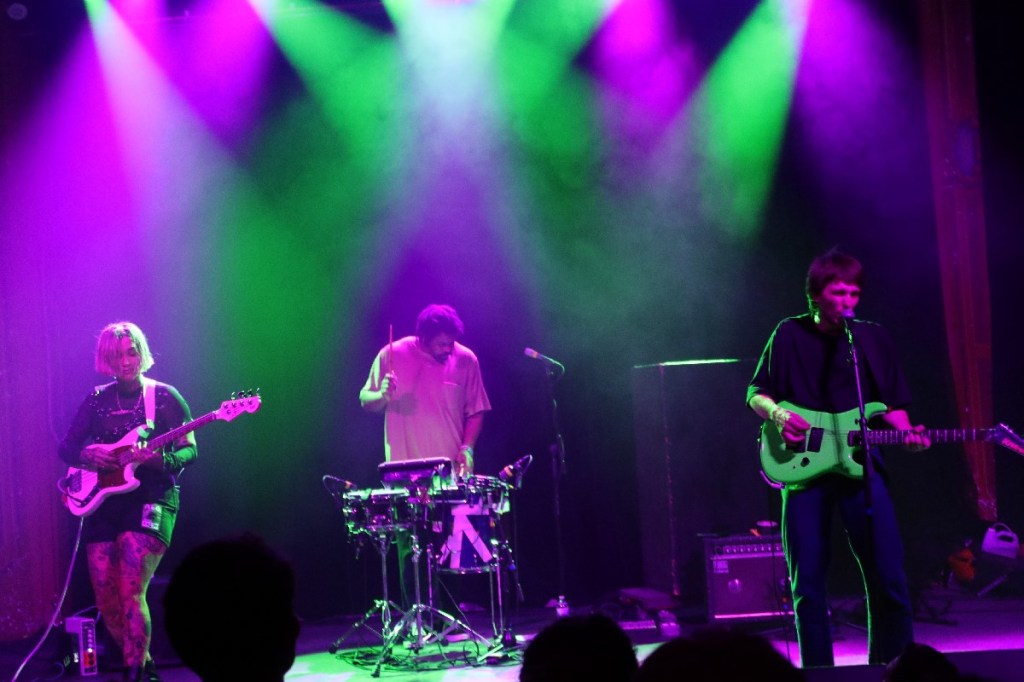
Chicago’s noise pop band Dehd interestingly enough played the first show of its Spring tour in Denver at the Bluebird Theater. Perhaps not so unusual since, apparently, singer/bassist Emily Kempf has been spending a bit of time in New Mexico of late. But this show was very Chicago-centric with another Windy City trio on the bill with darkwave industrial group Pixel Grip. Stylistically it would take some effort to find bands further apart. But both represented distinctly different side of a city known for bands with eclectic influences.
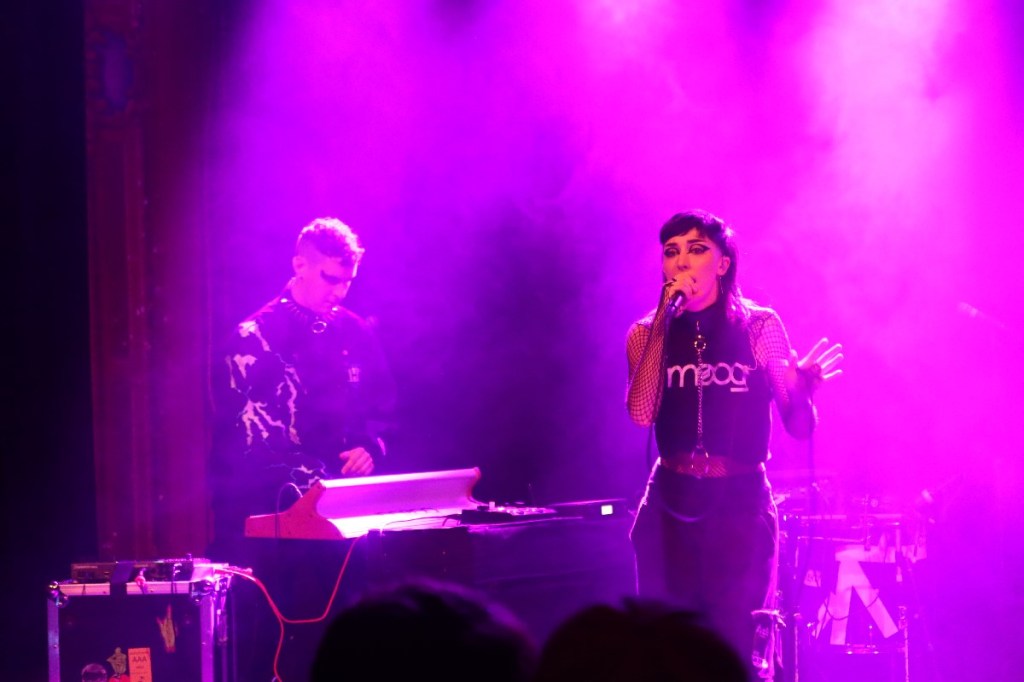
Pixel Grip at Bluebird Theater 5/2/22, photo by Tom Murphy
Pixel Grip’s Rita Lukea took the stage alone at the beginning of the show with just a microphone and backing tracks for the first song. And that would have been compelling enough for a whole set such was Lukea’s commanding presence as a singer. But when Tyler Ommen and Jonathon Freund came on to take up places on synths and drums the sonic signature became more saturated and the rhythms deeper and with such a rich low end that it reminded those in the know of a techno show at a warehouse somewhere at which the people holding the event bring in real gear. Lukea’s vocals remained strong but there was also a completely unaffected vulnerability in her performance that was powerful on its own, that coupled with an utterly sincere way of engaging with the audience that helped to make the music immediately and constantly accessible.
Pixel Grip at Bluebird Theater 5/2/22, photo by Tom MurphyDehd at Bluebird Theater 5/2/22, photo by Tom Murphy
You can have listened to every Dehd record and not be prepared for the sustained bursts of joy the band exudes on stage. Often lumped into loose categories like post-punk, garage rock and surf rock, Dehd is all of those things but its spirited performance somehow incorporates a healthy, self-deprecating Midwestern sense of humor with songs that are a direct line to heartfelt emotion transmitted with great sincerity and enthusiasm to the audience. The presentation of the music is that of self-aware bravado infused with a startling vulnerability that strikes in unexpected moments in almost every song. In that way Dehd came off like a party band that gave up the uninspired hedonistic lyrics for something with more depth and soul.
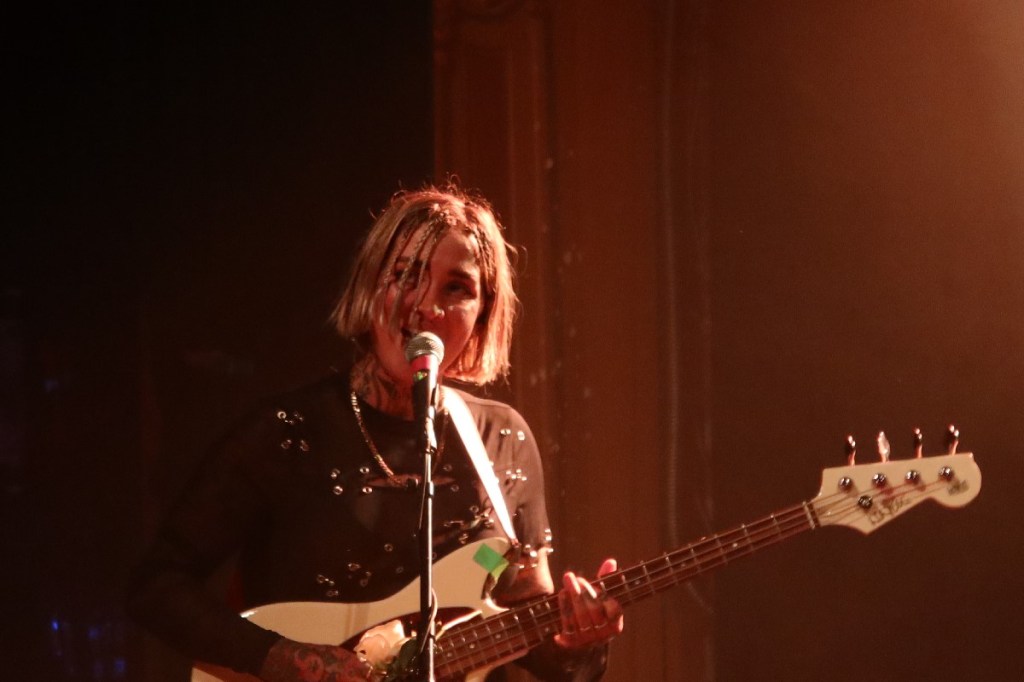
Dehd at Bluebird Theater 5/2/22, photo by Tom Murphy
Much of the joking from stage came from Kempf who said she was a Virgo at one point (which it turns out isn’t simply a joke) and asked the crowd where they were on the astrological spectrum, getting some humorous responses. And almost as a non-sequitur Kempf asked “Where have all the cowboys gone” and maybe that Paula Cole hit got teased by the rest of the band. The synergy of what seemed like a loose performance but which really wasn’t was a fascinating display of contrasts.
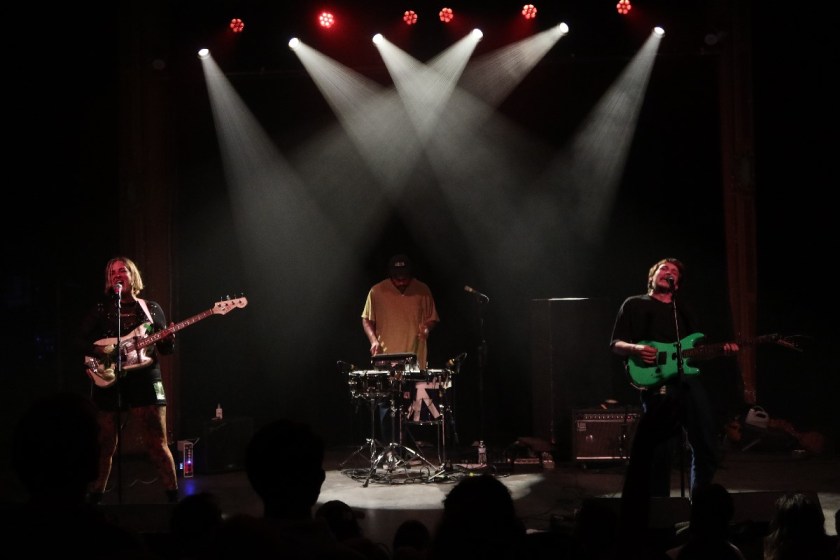
Dehd at Bluebird Theater 5/2/22, photo by Tom Murphy
Throughout the show one couldn’t help but be impressed with how Dehd could stretch way out with the melodies and then come back together in tight dynamics with both Kempf and singer/guitarist Jason Balla throwing themselves bodily into the performance singing from their core while Eric McGrady, no slouch on performing with his entire body either, seemed like a tranquil and steady presence standing up and playing his small set of drums. He made it look easy but the music demands creative and imaginative percussion. But the force of the performance didn’t just come from that visceral intensity, it came in the moments when the songs went atmospheric and introspective and the vocal performances weren’t simply fiery and earthy, they evoked complex emotions with a disarming simplicity. The vocals on “Disappear” and “Dream On” are some of the best of the band’s impressive catalog and the latter surely a standout on the group’s forthcoming full-length Blue Skies (due out May 27, 2022 on Fat Possum), from which more than a couple of songs in the set were taken though there was plenty from Flower of Devotion, Water and earlier releases. Ending the encore with “Desire” seemed like an exclamation point on a set of all high points. If Dehd is right now a bit of an indie cult band the exuberance of its live shows and how so many of its songs linger with you should propel it wider circles before too much longer.
Dehd at Bluebird Theater 5/2/22, photo by Tom MurphyDehd at Bluebird Theater 5/2/22, photo by Tom Murphy
Gut Czech’s spare guitar figure at the beginning of “Mental Inventory” is a delicate invitation into a song that evolves with an elegantly organic and measured pace. The whole time the vocals and the instrumentation are gently hypnotic and though addressing issues of mental health its dynamic is one of languid drift the way you’d hope to have in your head space when trying to sort out your deepest feelings and the tangled roots of the pains and angst that linger long past the point of heartbreaking experiences and the inevitably overwhelming feelings of regret that can sink your mood if you let them. Josh Czech’s falsetto jibes well with the swell of atmospheres, the adding and subtracting of layers are dramatic without being abrupt leaving moments of tonal saturation at the perfect times to accent contemplative passages and spaciousness when you’re ready for the rush of feelings to subside for just a little while. The melodic strategy is unconventional and yet it sticks with you like a fond memory not unlike what Letting Up Despite Great Faults did on “She Spins” but with a different style of music. There is keen ear for nuances of songwriting and a sense of the ebb and flow of the psyche and pairing them together in evidence in this song. Listen to “Mental Inventory” on Spotify and follow Gut Czech on Instagram.
For “Khafif Khafif” (English: “Softly Softly”) Nancy Mounir tapped into the recorded catalog of famed early Twentieth Century Egyptian singer Saleh Abdel Hay and mixed it in with her own vocals and ambient treatments in the mix. This borrowing archival recordings of popular music from another era and recontextualizing it for the present Mounir employed throughout her debut album Nozhet El Nofous (English: Promenade of the Souls) set for release June 3, 2022 on Simara Records. The effect is like the restoration of an old, lost film with an aesthetic that resonates now but has the greatest signifiers for those familiar with its proper context. It brings with it to the uninitiated an air of mystery and when it sinks in these arrangements and the production that helps to enhance the sound wouldn’t have been possible, say, ninety years ago (though Hay lived until 1962). But Mounir’s attention to sonic detail doesn’t reveal a hint of modern treatments until the end of the song where even then the grainy quality of the vocals and instrumentation is applied to the more subtle, electronic elements that takes us from a trip to the past through a hazy yet illuminated sonic corridor back to the present. Listen to “Khafif Khafif” on YouTube and connect with Mounir at the links provided.
Small Island Big Song is not a conventional musical project in any usual sense. It is a a multimedia (music, film, performance) collective including over a hundred musicians across 16 island nations of the Pacific and Indian Oceans that serves to create a contemporary musical statement from the perspective of the regions that are facing cultural and environmental challenges which clearly has an urgent relevance today. All of the works are written, recorded and overdubbed in nature at the place of the various artists’ custodial land. All of the works out of this project are a co-production of Taiwan and Australia. For the single “Listwar Zanset” (“the story of our ancestors”) Mauritian singer, songwriter and dancer Emlyn and Taiwanese singer Putad (of the Amis people) collaborate with vocals over an interlinking flow of percussion with backing vocals and later stringed instruments. Their voices are strong and lively to match the instrumentation and one need not understand Creole or Amis to be impacted and certainly not the message in English of threatened cultures and people toward the end of the track. The song operates beyond language and its message of liberation and the preservation of memory and culture can be felt in its fortifying and confident tone. On the world stage the indigenous and those not wielding the greatest economic, political and military power are often overrun and neglected when history bears out that the fate of these people becomes the fate of all in the end and it’s best to listen now when it’s not too late for everyone. Watch the video for “Listwar Zanset” on YouTube and connect with Small Island Big Song at the links below to hear more from this unique project whose music exists outside a narrow conception of existing genres.
It seems only appropriate that Savage Republic’s video for the lead single “Stingray” from its new album Meteora (it’s first since 2014’s Aegean) looks like it was filmed on VHS on the seashore. The almost entirely instrumental track showcases the more playful yet edgy side of the band and an example of how it threaded together surf rock with menacing post-punk and non-Western rhythm schemes. It sounds fairly straightforward until it sinks in that it’s probably not in 4/4 time. As an introduction to the band’s respectable body of work it’s a pretty accessible and energetic short slice of the band’s eclectic aesthetic. Other tracks on the album including “Nothing at All” linked below demonstrate how Savage Republic has always been deft at injecting pointed post-punk with almost tribal rhythms and raw industrial beats. The new album also has tastes of the band’s nuanced yet direct political lyrics. From its 1982 debut album Tragic Figures (the song “Real Men” appeared in the 1991 film The Silence of the Lambs) through the albums the group has released since it got back together in 2002, Savage Republic has been explicitly anti-authoritarian and on Meteora making no bones about being anti-fascist. All while having some creative fun with making darkly cathartic soundscapes alongside its more international musical roots in crafting arresting songs that make it seem exciting to be on the right side of history without getting didactic about it all. Watch the videos for “Stingray” and “Nothing At All” on YouTube and connect with this influential cult post-punk band at the links below.









 Queen City Sounds and Art
You must be logged in to post a comment.